
Fantastic contemporary home on a quiet cul-de-sac on a hard to find two-thirds acre lot in the heart of Dallas. This house is made for entertaining with its chef's kitchen outfitted with commercial grade appliances. The home also features a secondary catering kitchen. 6200+ sq. feet. All for under $1.7 million! For more information give us a call!
Downsizing your home: How to determine if a smaller house is the right move

Happy Memorial Day

Getting Pre-Approved Should Always Be Your First Step

This article originally appeared on Keeping Current Matters.
In many markets across the country, the number of buyers searching for their dream homes greatly outnumbers the number of homes for sale. This has led to a competitive marketplace where buyers often need to stand out. One way to show you are serious about buying your dream home is to get pre-qualified or pre-approved for a mortgage before starting your search.
Even if you are in a market that is not as competitive, understanding your budget will give you the confidence of knowing if your dream home is within your reach.
Freddie Mac lays out the advantages of pre-approval in the ‘My Home’ section of their website:
“It’s highly recommended that you work with your lender to get pre-approved before you begin house hunting. Pre-approval will tell you how much home you can afford and can help you move faster, and with greater confidence, in competitive markets.”
One of the many advantages of working with a local real estate professional is that many have relationships with lenders who will be able to help you with this process. Once you have selected a lender, you will need to fill out their loan application and provide them with important information regarding “your credit, debt, work history, down payment and residential history.”
Freddie Mac describes the ‘4 Cs’ that help determine the amount you will be qualified to borrow:
- Capacity: Your current and future ability to make your payments
- Capital or cash reserves: The money, savings, and investments you have that can be sold quickly for cash
- Collateral: The home, or type of home, that you would like to purchase
- Credit: Your history of paying bills and other debts on time
Getting pre-approved is one of many steps that will show home sellers that you are serious about buying, and it often helps speed up the process once your offer has been accepted.
Bottom Line
Many potential home buyers overestimate the down payment and credit scores needed to qualify for a mortgage today. If you are ready and willing to buy, you may be pleasantly surprised at your ability to do so.
18 Secrets From Real Estate Insiders

This article originally appeared on CNBC.com
Rachel Farrow
Potential home buyers walk past an 'Open House' sign displayed in the front yard of a property for sale in Columbus, Ohio.
Investing in real estate can be a path to wealth, whether you're buying a home to live in or purchasing an income property. Or it can be a horrible boondoggle that saps your savings and cracks your nest egg.
Even if you get a great deal when you purchase a home, you can blow it later by making a poor sale. Sometimes you're better off staying away from real estate altogether and simply continuing to rent. Knowing the tricks of the trade can go a long way toward making sure your next real estate transaction is a smart one.
Time Your Sale for Maximum Earnings — or Savings
Real estate prices are vulnerable to seasonal fluctuations, so good timing can increase sellers' profits or result in considerable savings for buyers. A recent Zillow survey found that buyers who hold off purchasing until late summer are likely to find good selections and lower sale prices. Sellers, on the other hand, do best in the spring, when fewer active listings mean more competition for available homes — and higher prices.
Base Your Sale or Offer Price on Your Agent's Market Analysis
Real estate portals like Zillow and Trulia can serve as a good starting point for learning your local real estate market, but their value estimates aren't always very accurate. Zillow's median error rate is 4.6 percent overall, according to its website. But the number of "Zestimates" that fall within 5 percent of the actual sale price range from 80 percent for Manassas, Va. to just 3.8 percent for Chambers County, Ala. Don't make an unforced real-estate investing mistake by starting with a price that's too high or too low.
Smart Preparation Can Help Boost an Appraisal
Appraisers use a systematic approach to determine a home's value. As meticulous and precise as this approach is, appraisals are, by definition, opinions of value, so it's possible that an appraiser's personal impression of your home might tip the scales in one direction or the other. You can also dispute a low home appraisal if you are dissatisfied.
Prepare your home by cleaning up inside and out. "Get rid of all the clutter in your home," said Jonathan Miller, president and CEO of Miller Samuel, a New York-based real estate appraisal and consulting firm. Tidying up makes the home appear larger, Miller said. Paint touch-ups and other cosmetic repairs also make a favorable impression.
A Home Tour Video Might Sell Your Home Faster
More than 80 percent of all buyers now find their homes online, said Ben Salem, who owns Ben Salem Properties in Beverly Hills, Calif. "So when you have a YouTube video that comes up on Realtor.com, that's huge," he said. "The best part is that you're one click away from showing it to the whole world."
Salem has a series of home-tour videos on his website. Catchy music and sharp camera work help, too. It might cost a few hundred bucks, but a video home tour can be worth the investment.
Some Home Improvements Add Value — and Some Don't
Take time to research what kinds of home improvements add value to your home, because not all do. A good rule of thumb is to avoid out-pricing the real estate market. Don't shell out thousands of dollars you can't recoup, especially if similar homes in your neighborhood don't boast the same types of upgrades.
Instead, focus on projects that give you the best return on your investment. Exterior renovations like a new garage door or entry door almost always pay for themselves, and you'll also get a decent return on a minor kitchen or bathroom remodel, according to Remodeling's 2018 Cost vs. Value Report.
You Can Defer the Capital Gains Tax
You can defer the capital gains tax on the sale of your investment or business property by doing a 1031 like-kind exchange. To qualify, the sale of your current property, and the purchase of the new one, must represent "mutually dependent parts of an integrated transaction constituting an exchange of property," according to the IRS. That means you can't simply sell one investment property and use the sale proceeds to purchase another. But you do have 45 days from the sale of the initial property to find possible replacements, and you get 180 days to complete the exchange. Capital gains tax is then deferred until you sell or otherwise dispose of the replacement property.
A Home Warranty Is a Great Marketing Tool
For about $500, you can add value to your home sale by offering buyers a home warranty to cover the cost of repairing or replacing appliances and heating/cooling, electrical and plumbing systems. The warranty also provides peace of mind for cash-strapped new homeowners for whom a major repair would cause serious hardship.
The warranty can even serve as a negotiating tool when a buyer has concerns about the age of a properly functioning system, such as an older air conditioning unit. For a fraction of the cost of a new unit, you can purchase a warranty on the buyer's behalf.
Location Still Matters
Your home's appeal might come down to your community's stellar points, from excellent schools to ample green space and nearby entertainment. People looking at your home might not realize these advantages right away — and even your real estate agent might miss some of them.
Talk up your neighborhood's best features to sell your home for a bigger profit. Start by making a checklist of recent exciting developments you've seen, like upscale restaurant openings and new museums, parks and other amenities. See the most expensive zip code in every state.
Putting Your Home Into a Trust Can Cut Your Taxes and Your Heirs'
State and local governments often impose transfer taxes on real estate transactions. Putting the home into a qualified personal residence trust lets you transfer ownership to your beneficiaries without paying the full transfer tax. The transfer also reduces the size of your estate by the property's remaining value at the time of the transfer, which can reduce the amount of estate tax your beneficiaries owe.
You can continue living in your home for a predetermined period before you distribute the home to your beneficiaries or a trust in their names. Once the term concludes, you can pay rent to your beneficiaries if you want to continue living in the home.
Auctioning Your Home Might Be a Smart Option
With real estate in high demand in some areas, smart homeowners can actually start a bidding war for their properties.
"The most compelling reason for an auction is that a seller can decide when their property will be sold, instead of leaving it to the vagaries of the market, and specifically what date," said Rick Levin, president of Rick Levin & Associates, a Chicago-based real estate auction firm.
"And right now, demand is greater than supply for many homes in many parts of the country," he said. "So you get many types of bidders fighting for the home and driving the price higher until it sells."
'Price Bands' Can Help or Hurt Your Sale
Real estate portals like Zillow and Realtor.com ask users to enter minimum and maximum prices when they search homes. This price range is called a price band, and pricing your home to fall within a realistic one can have a significant impact on your sale.
A buyer looking to spend $225,000, for example, might search properties listed between $200,000 and $230,000. Overpricing your home could bump you up to a higher price band and essentially hide your listing from the buyers most likely to purchase it.
Turnkey Real Estate Can Be a Moneymaker for Sellers
A turnkey property is one that's move-in ready — the buyer doesn't have to do a thing before living in the home or renting it out. Listing your home in this condition can earn you top dollar on the sale.
Residential buyers who have no time or desire to tackle home-improvement projects are often willing to pay a premium price to avoid it. The same holds true for investors who see a turnkey property as an opportunity to start generating cash flow right out of the gate.
Fixer-Uppers Save Buyers Money in the Long Run
Chances are, buying a fixer-upper will save you money in the long run, even after you factor in the cost of repairs. Turnkey homes are priced similarly to newly constructed homes, according to Realtor.com. And new constructions are typically much more expensive than resales of similar size, features and location.
Buying a Lender-Owned Property Can Save You Money on Closing Costs
Foreclosed homes that have been repossessed and listed for sale by the lender are called real estate-owned properties, or REOs. Because lenders aren't in the business of selling real estate, they typically offer buyers incentives to help move REO properties faster. These incentives often include the lender paying some or all of the closing costs, which typically run 2 percent to 5 percent of the sale price, according to Zillow.
The Capitalization Rate Can Reveal an Investment Property's Overall Value
Two properties in different cities that generate the same income might not represent the same value. If you're investing in real estate, the capitalization rate — or cap rate — helps you determine how much your assets are really worth by providing a baseline for the comparison.
The cap rate is determined by dividing the net operating income by the current market value. A property worth $100,000 that generates $10,000 in net income, for example, has a cap rate of 10 percent. A property worth $500,000 earning the same net income would have a cap rate of just 2 percent. In this example, the $100,000 property is likely to generate a greater return on your investment.
Home Equity Lines of Credit Might Never Be Cheaper
Mortgage interest rates are on the rise as of early 2018, and experts predict they might hit 5 percent by year's end. If you're considering a home equity line of credit, or HELOC, now is probably a good time to get it.
"I'm a big fan of home equity loans when used responsibly," said Bijan Golkar, CEO and senior advisor of FPC Investment Advisory in Petaluma, Calif. "Many people have most of their wealth trapped in their main home. Having a HELOC allows you to have quick access to capital and you can normally write off the interest on your taxes."
Just make sure you understand how to leverage home equity before you do so.
A 15-Year Fixed Payment Isn't Much More Than Payments on a 30-Year Loan
Interest rates are typically lower on 15-year fixed-rate loans than on 30-year fixed-rate loans. The fact that you get a lower interest rate — and that you have less interest to pay overall — means that when it comes to the monthly payment, there is often a smaller cost difference than you might think between a 15-year loan and 30-year loan.
Sure, you'll pay more each month with the 15-year loan — about $500 more per month on a $200,000 loan as of March 2018. But that's a small price to pay to shave 15 years and nearly $85,000 in interest off a mortgage.
Renting Is Sometimes Better Than Owning
Although your home's value might rise, it also could fall. Rich Arzaga, founder and CEO of Cornerstone Wealth Management in San Ramon, Calif., examined 250 properties around the United States and went through close to 40 client files to project the financial impact of owning real estate versus renting.
"One hundred percent of the time, it was better to rent rather than own," Arzaga said. When you own a home, the carrying costs — expenses needed to maintain the asset — range from property taxes and home insurance to emergency repairs and renovations. In a rental situation, the landlord covers those costs, leaving the occupant free to invest revenue in other areas.
Rent vs. Buy Calculator
Rent vs. Buy Calculator
Is it cheaper for you to rent or buy? We'll show you how many years it will take before the cost of buying equals the cost of renting – the breakeven horizon. If you'll stay in your home past the breakeven horizon, consider buying; if you'll move sooner, renting might be a better option.

Zillow has a super-fun calculator to determine your break-even point to buy over renting! Click here to play with your numbers.
For example:
Cost: After 2 years, your total cost of homeownership (down payment, mortgage, taxes, etc.) for a $180,100 home in Dallas, TX would be $75,080. Your total cost to rent would be $41,063. Renting leaves you with $34,017 in your pocket (including the money you didn't spend on a down payment).
Gain: After 2 years, if you buy, your home will have $59,651 in equity (available to you when you sell). However, if you instead rent and invest your down payment and the other money you save, at a 6% return rate it will earn around $3,862 in 2 years.
Bottom line: Looking at your gross costs, equity and investment potential, it's better for you to buy than rent if you plan to live in your home more than 1 year and 8 months.
May Real Estate Outlook for Dallas & Collin Counties


12319 Marbook | Reduced!
JUST REDUCED! $1,750,00.
12319 Marbrook Drive in North Dallas is perfectly situated on .6 acres at the end of a quiet cul-de-sac. There is plenty of room in this pleasant contemporary with 5 bedrooms, 5 and 2 half baths. Make your appointment today!
Recently Sold! 4407 Belmar Court

10 Things Everyone Should Know Before Moving to Dallas

This article originally appeared on Dmagazine.com
From traffic to Tex-Mex, here are a few tricks to help you get settled, save some cash, and live like a local.
BY D PARTNER STUDIO PUBLISHED IN SPONSORED MARCH 14, 2017 9:30 AM
1. It’s not all cowboys and tumbleweeds.
Contrary to what J.R. and Sue Ellen Ewing might’ve led you to believe, there’s more to the bustling city of Dallas than oil industry drama and cowboy boots. In fact, we consider ourselves quite cosmopolitan—just check out our high-caliber shopping destinations.
2. Texas barbecue is the undisputed best, but get it while it’s hot.
You might’ve heard some of the delicious legends surrounding Texas barbecue, but there’s even more to it than that. (There are four to five sub-styles of Texas barbecue, but we’ll let your new favorite pitmaster tell you the tricks of the trade.) No matter which tried-and- true barbecue joint you choose, here’s a tip: Get there early. Everything really is bigger in Texas, especially the lines for the slow-smoked good stuff, and restaurants like Pecan Lodge and Sonny Bryan’s will close up shop when they sell out.
3. Hate grocery shopping? Make it more bearable with a cold one.
Yeah, you read that correctly. Here in Dallas, you can drink at the grocery store! Or at least at a select few. If you’re shopping at a Central Market or Whole Foods, you can sip locally brewed ales, Texas wines, and much more. A few local grocers also offer the option, too. Cheers!
4. Our winter weather is crazy.
Ever been trapped on a highway for three hours because it’s just above freezing and a local weatherman insinuated that there *might* be precipitation? Welcome to Dallas, where we panic to compensate for our lack of actual winter weather besides the occasional snow flurry or ice storm. (Sometimes it’s best to play it safe and stay home with the heat on.)
5. And so is our summer heat.
You’ll see—and feel—what we mean when you see your car’s temperature gauge pass 120°F. But there are a few positive sides. It gets so hot that even bars and restaurants throw pool parties to help you cool down. And you can always crank the AC.
6. Speaking of weather, make sure you’re smart about electricity and other utilities.
The Texas energy market is competitive. And when it comes to choosing the best electricity plan for your home, there’s going to be a long list of options. Since Dallas sees both hot summer heat and cold, icy winters, selecting a fixed-rate plan provides the benefit of having the same rate, no matter the weather. Also look for perks like Direct Energy’s Free Weekends plan, because it’s literally free electricity, plus a solid weekday rate. You can enjoy your free energy supply every weekend when you’re home doing the laundry, throwing dinner parties, hosting karaoke night—you name it. This plan actually provides the most free energy on the weekends than any other local energy provider, from Fridays starting at 6 p.m. until 11:59 p.m. on Sundays. And if you’re philanthropically inclined, check out Direct Energy’s Give Brighter plan, which sends a solar-powered Luci light to people in developing countries at no additional cost to you.
7. We’re a city that likes to call our own shots.
Dallas has been known for taking on the seemingly impossible, like that time we built an urban park on top of a highway, or those other times we attracted huge-name headquarters to move to our zip code. We also appreciate the power to choose in every facet of life, and that includes everything from which Tex-Mex spot we’ll hit for dinner to which local dive we’ll visit for live music after dessert. We also appreciate the power to choose when it comes to our utilities providers, which is why perks like 100 days of free electricity, free weekends, and plenti rewards points make Direct Energy stand out.
8. The rush hour traffic is no joke.
Learn when to drive against the flow, use a maps app, find a back-road shortcut, or get comfortable with your favorite audiobook or podcast, but whatever you do, use your blinker and don’t text and drive! (Seriously. The traffic-packed, six-lane highways are treacherous enough as it is.)
9. When we’re not behind the wheels of our cars, most of us are very polite.
Southern hospitality is real, y’all. Doors are held open, local businesses are friendly and accommodating, pleases and thank you’s are always exchanged, and you’ll always be asked if you’ve saved room for dessert.
10. You’ll learn to love local.
From decades-old Tex-Mex restaurant dynasties to storied local music venues and sports franchise powerhouses, the whole Dallas-Fort Worth area is a magnet for entrepreneurs, wildcatters, and those with big ideas. And while we’re not brainstorming our own Shark Tank pitch for a chance encounter with Mark Cuban at a Mavs game, we’re reaping the benefits of our vibrant local culture in the form of delicious food at welcoming neighborhood restaurants, dive bars, and concert halls.
Dreaming of a Luxury Home? Now's the Time!

This article originally appeared on Keeping Current Matters
If your house no longer fits your needs and you are planning on buying a luxury home, now is a great time to do so! Recently, the Institute for Luxury Home Marketing released its Luxury Market Report which showed that in today’s premium home market, buyers are in control.
The inventory of homes for sale in the luxury market far exceeds the number of people searching to purchase these properties in many areas of the country. This means that homes are often staying on the market longer or can be found at a discount.
Those who have a starter or trade-up home to sell will find buyers competing, and often entering bidding wars, to be able to call their house their new home.
The sale of your starter or trade-up house will help you come up with a larger down payment for your new luxury home. Even a 5% down payment on a million-dollar home is $50,000.
But not all who are buying luxury properties have a home to sell first.
A recent Bloomberg article gave some insight into what many millennials are choosing to do:
“A new generation of affluent homebuyers powered by a surge in inherited wealth is driving the luxury-home market, demanding larger spaces and fancier finishes, according to a report heralding ‘the rise of the new aristocracy.’”
Bottom Line
The best time to sell anything is when demand is high, and supply is low. If you are currently in a starter or trade-up house that no longer fits your needs and you are looking to step into a luxury home, now’s the time to list your house for sale and make your dreams come true.
Young Homebuyer in the Dallas Area? Check Out These Neighborhoods!

This article originally appeared on Thrillest.com
At Thrillist, we love big cities, but we also recognize the appeal of smaller towns with the same mix of great food, nightlife, and culture -- plus a lower cost of living. That’s why we’ve partnered with the National Association of Realtors® on a content series highlighting the best suburbs of six major cities, perfect for young urbanites who may be looking to buy a home. And when it’s time to start house-hunting, working with a Realtor® (a real estate professional who is a member of the National Association of Realtors®) means there’s someone to help you navigate all those bidding wars, confusing legal contracts, and fixer-upper headaches along the way. Dream home, here you come.
By AMANDA COBRA
By now, you’ve almost certainly heard all of the stereotypes about millennials -- good and bad (OK, mostly bad). But one trend among this generation that may surprise people is that they’re increasingly taking the plunge into home ownership. Sure, 20- and young 30-somethings enjoy the entertainment, culture, and convenience of urban life, but the quest for affordable housing can cause even the most die-hard city-dweller to start to look towards the suburbs.
Dallas, in particular, offers advantages for young house-hunters. Not only is the median home price here much lower than other major metro areas, there are a number of suburbs that offer that Texas sense of community as well as enough entertainment, dining, and leisure options to keep you busy on weekends. And hey, if you miss the city, you’re still only a short trip away from downtown.
So, ready to give up your Dallas address? Here are the five most millennial-friendly suburbs to consider.
DUNCANVILLE/DESOTO/CEDAR HILL
For young adults who have been priced out of Oak Cliff or prefer the hillier terrain of South Dallas, Duncanville/DeSoto/Cedar Hill is the way to go. This trio of cities, which make up the suburban heart of southern Dallas, are incredibly popular with millennials who appreciate the outdoors and are in the market for bigger lot sizes than most towns offer.
The area’s biggest gift to nature lovers is Cedar Hill State Park, home to the 7,500-acre Joe Pool Lake, where you can swim, fish, and paddle. On land, camp at one of 350 campsites, hike or mountain-bike the 1,200 acres of trails, or tour an old Texas farm. Throw in a boat ramp and picnic area, and you’ve got everything a young couple or family needs for a fun weekend outdoors.
Historically, these cities have also been a more ethnically diverse counterpoint to the sometimes bland suburbs surrounding the city -- the population of each is more than two-thirds Black and Hispanic. Nowhere is this respect for diversity more obvious than at the Museum of International Cultures in Duncanville, which promotes global awareness and understanding through its programs, seminars, and exhibits. Another way to observe the sense of community in the area? Attend a Friday-night football game at DeSoto High School, where pride in the Eagles football team, the 2016 Division II state champs, is a very, very big deal.
GARLAND
Garland’s close proximity to Dallas and the millennial-friendly housing prices make it one of the most popular suburbs with younger, first-time homebuyers -- especially those who favor the great outdoors. Nine miles to the east, Lake Ray Hubbard provides outdoor leisure activities like fishing, boating, and water skiing, while the Spring Creek Forest Preserve in town offers year-round hiking opportunities and regular guided walks on topics such as water conservation and eco-friendly gardening.
Trains from the DART light rail Blue Line station get you to downtown Dallas in 25 minutes, which means parking and riding to work is an affordable commuting option. Residents also enjoy easy entry to I-635/LBJ Freeway, I-30, and State Highway 190, making the drive to neighboring suburbs or the urban core much easier. “With the relatively recent completion of the George H. W. Bush Turnpike, Garland has finally become accessible to everyone” says Eloise Eriksson Martin, a Dallas real estate agent and Realtor® -- a member of the National Association of Realtors®. “Garland is minutes from Dallas, but cross the lake and drive for 15 minutes and you're in the country.”
Working artists Marti Schweitzer, an actress at the Ochre House theater, and her husband Cheyenne, lead singer of The Rich Girls, were priced out of Dallas and ended up in Garland for exactly that reason: “It takes me 15 minutes [to get to Ochre House] in little traffic and you get to choose any school in the district,” Schweitzer says. “Plus, I found this awesome pocket of country directly off the freeway. There are horseslooking over my back fence. I get to touch them.”
To top it off, there are a wide range of homes available in Garland in lots of different styles and affordable price points. So hipsters who have always dreamed of doing the HGTV remodeling thing can buy a fixer-upper, mid-century modern house that would be way out of their price range in Dallas -- and still have enough money to remodel it.
GRAND PRAIRIE
While Grand Prairie has not always been considered a hip suburb for young people, its caché is starting to grow as millennials begin to appreciate its easy access to both Dallas and Fort Worth. Such a centralized location means that residents are able to take advantage of the robust job market not just in Dallas, but all around the DFW Metroplex.
Also helping entice first-time homebuyers to the area is the addition of shopping and recreation options that appeal to younger singles and families. IKEA recently opened their second Dallas-Fort Worth store in Grand Prairie, in part because of that aforementioned centralized location. As for recreation, the Texas Airhogsindependent minor league team plays in town; in addition to catching a baseball game, their ballpark also has a 17,000 square-foot playground for the kids, a swimming pool, and a restaurant/bar area.
For loyalists of Oak Cliff or Deep Ellum who don’t want to give up access to live music by moving to the suburbs, the Verizon Theater in Grand Prairie is one of the largest non-stadium concert venues in the area, where, on any given night, you can catch acts like stand-up comedian Katt Williams or Grammy-winning country group Sugarland. For the young or simply young at heart, Epic Waters, the city’s newest addition, is an 80,000 square-foot indoor water park.
PLANO
Plano has long been considered the gold standard of Dallas suburbs. Two decades ago, it was a far-flung suburb to the north of Dallas that almost exclusively featured high-priced homes and more well-established older families. But in the past 20 years, the northernmost suburbs of Dallas have stretched even further north to include Frisco, The Colony, and McKinney -- opening up Plano to the younger, up-and-coming set.
The city has, for lack of a better term, the best of both worlds by being a suburb but also having some sense of history. While those pricier suburbs to the north only began their explosive growth in the 1990s, Plano started its boom in the 1970s, which translates to a more diverse range of available homes in terms of age and price point. Add to that the fact that Plano public schools are phenomenal (nine of its schools earned a perfect 10 out of 10 rating from GreatSchools.org), and it makes a prime location for millennials who have or intend to start a family.
There are perks for adults, too. The DART light rail Red Line gets you to downtown Dallas in 45 minutes. Toyota opened its new, 100-acre North American headquarters here last year, bringing new jobs with it. Martin, the real estate agent and Realtor®, also points to “the Shops at Willow Bend, Shops at Legacy, and Legacy West, a 240-acre mixed-use project” as further points of interest in Plano. The latter is home to Legacy Hall, a gourmand paradise consisting of 30 stalls offering every type of food and beverage imaginable (including lobster rolls, Philly cheesesteaks, and ginger beer floats), craft beer at Unlawful Assembly Brewing Co., and a schedule of live music.
RICHARDSON
The prize for the suburb with the easiest access to all that downtown Dallas has to offer goes to Richardson, which is a 20-minute straight shot down I-75 South. (Its four light rail stops also make commuting via public transport easy.)
But let’s talk about what is arguably the biggest perk of life in Richardson: its diverse cuisine. The stretch of Greenville Avenue between Main Street and Arapaho Road is home to a robust Asian food district with options ranging from Korean barbecue joints, hole-in-the-wall pho restaurants, some of the best dim sum you will ever eat at Kirin Court, and where most agree serves the best Chinese food in the Metroplex, First Chinese BBQ. There’s also a large Indian and Mediterranean food scene surrounding the downtown Richardson area with staples such as Bawarchi Biryanisfor halal Indian and Afrah for Lebanese.
That diversity (plus the need for more space) is what drew writers Jason and Elizabeth Philyaw from Dallas’ Oak Cliff neighborhood to Richardson in 2015. “When our youngest son came along, our house in Oak Cliff got 33.3% smaller,” Jason says. “We chose Richardson for a lot of reasons, not the least of which is the [public] schools. Elizabeth takes the train from the Spring Valley station to work downtown every day. My kids wanted a pool and an upstairs. Did I mention Afrah? Now I need shawarma.”
Besides the top-notch food and schools, Richardson is also becoming a center for industry, technology, and the arts. The University of Texas -- Dallas located here is home to top-tier robotics and tech graduate programs. State Farm’s regional hub at the CityLine campus employs 7,200 people and counting and Blue Cross Blue Shield’s Texas headquarters is in Richardson, too, so insurance-industry jobs are available. Then, there’s the Eismann Center, a huge, multi-million dollar performing arts venue that is increasingly luring touring productions, such as PostSecret: The Show (about the secret-sharing blog that inspired a recent Smithsonian art exhibition), from Dallas’ Arts District to the suburbs.
Sold!

A New Housing Bubble Forming? Not until 2024!

This article originally appeared on Keeping Current Matters
A recent report by CoreLogic revealed that U.S. home values appreciated by more than 37% over the last five years. Some are concerned that this is evidence we may be on the verge of another housing “boom & bust” like the one we experienced from 2006-2008.
Recently, several housing experts weighed in on the subject to alleviate these fears.
Sean Becketti, Freddie Mac Chief Economist
“The evidence indicates there currently is no house price bubble in the U.S., despite the rapid increase of house prices over the last five years.”
Edward Golding, a Senior Fellow at the Urban Institute’s Housing Finance Policy Center
“There is not likely to be a national bubble in the way that we saw the first decade of the century.”
Christopher Thornberg, Partner at Beacon Economics
“There is no direct or indirect sign of any kind of bubble.”
Bill McBride, Calculated Risk
“I wouldn’t call house prices a bubble.”
David M. Blitzer, Chairman of the Index Committee at S&P Dow Jones Indices
“Housing is not repeating the bubble period of 2000-2006.”
A recent article by Teo Nicolais, a real estate entrepreneur who teaches courses on real estate principles, markets, and finance at Harvard Extension School concluded that the next housing bubble may not occur until 2024.
The article, How to Use Real Estate Trends to Predict the Next Housing Bubble, looks at previous peaks in real estate values going all the way back to 1818. Nicolais uses the research of several economists. The article details the four phases of a real estate cycle and what defines each phase.
Nicolais concluded his article by saying:
“Those who study the financial crisis of 2008 will (we hope) always be weary of the next major crash. If George, Harrison, and Foldvary are right, however, that won’t happen until after the next peak around 2024.
Between now and then, aside from the occasional slow down and inevitable market hiccups, the real estate industry is likely to enjoy a long period of expansion.”
Bottom Line
The reason for the price appreciation we are seeing is an imbalance between supply and demand for housing. This has created a natural increase in values, not a bubble in prices.
20 Tips For Preparing Your House For Sale This Spring
Why Late Spring is the Best Time to List
This article originally appeared on Forbes.com
Opinions expressed by Forbes Contributors are their own.
Spring has officially arrived, but most home sellers considering listing soon in order to capitalize on the impending spring home shopping season should consider waiting at least a few weeks more to both maximize their sale price and speed up the process.
Nationwide, the best two-week window for home sellers is the first half of May: U.S. homes listed in the May 1 to May 15 period generally sell almost two weeks faster than the average listing in the year, and they command a final price $2,400 more, on average, than homes listed at other times. The first half of May was the best time to list in 14 of the 24 large markets analyzed by Zillow.
The start to the 2018 spring selling season has been characterized by an acute shortage of homes for sale, meaning a large number of home shoppers likely will be unable to find the right home in the early weeks of spring. Later in the season, these buyers may end up spending more than they intended as they get wrapped up in competition and/or rush to conclude a deal before summer. This means late-spring listers can capture buyers like to be frustrated and earn an additional premium.
As with most things, there are exceptions to the early-May best-time-to-list rule.
In Pittsburgh, potential sellers thinking of listing this year should consider getting a move on: The Steel City’s magic window is March 16 to March 31 (i.e., right now), the earliest among the two dozen large markets analyzed. At the other end of the spectrum, St. Louis home sellers have the luxury of time: The best time to list in the Gateway to the West won’t come until the first half of June, latest among markets analyzed.
Home sellers on the West Coast generally gain the most by taking advantage of their market’s respective magic window. The six markets where sellers earn the largest premium over listing at the average time are all in California, Oregon or Washington. Sellers listing in the late-April magic window for San Francisco can expect to earn a $15,300 premium over listing at other times, the largest premium among all markets analyzed. Sellers in Dallas’ early May window can expect to earn $1,400 over listing at other times, smallest among markets studied.
Finally, listing later in the spring isn’t the only late advice worth taking. In a majority of markets, listing your home at the end of the week or on the weekend is the best bet in order to maximize the number of times a home is viewed on Zillow in the first few days of listing. According to earlier research, the largest number of home shoppers will see a given listing within its first week on the market, and it’s important to capture that early interest as quickly as possible to boost the chances of a quicker sale.
Nationwide, the best day to list a home for sale is Saturday. In every large market except for one, the best day was a Thursday, Friday, Saturday or Sunday. Only Boston bucked the trend: The best day to list in Beantown is Wednesday.

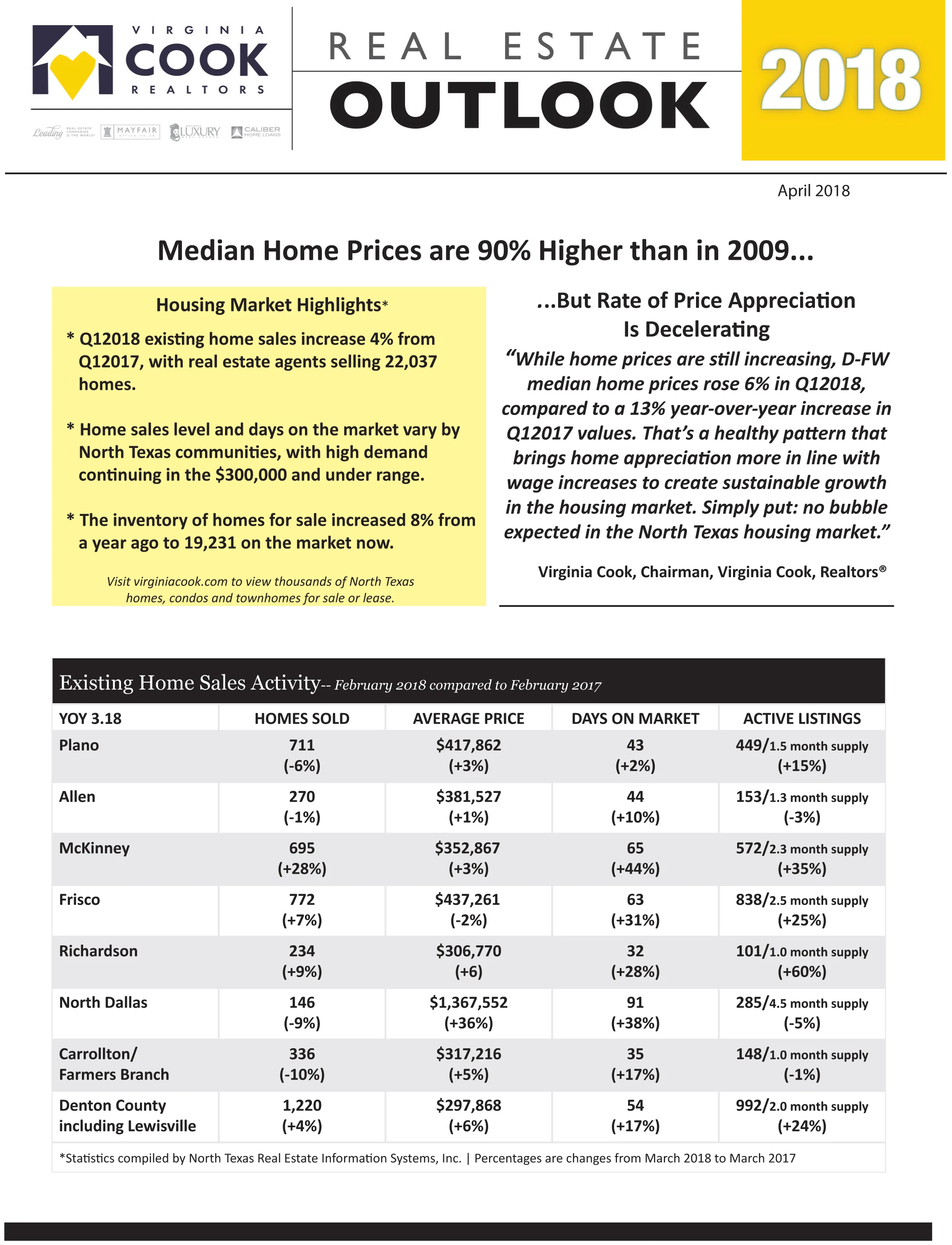
April Real Estate Outlook

Stage Extra Bedrooms to Fit Target Buyers

This article originally appeared on Realtor.com
No two people will look at a listing in exactly the same way. Here’s how to identify your target audience and stage unused space to address buyers’ needs.
BY KELSEY DOWN
According to the National Association of REALTORS®’ 2017 Profile of Home Staging, 38 percent of buyers agents acknowledged that staging had a positive impact on home value—but only if the home was decorated to a buyer’s taste. The question, then, is how do agents know what buyers are looking for?
Staging areas like the kitchen or the master bedroom might be straightforward enough because virtually every home buyer has the same general need for those rooms. When it comes to an extra bedroom, though, some might envision the space as an office, while others might see a nursery or a hobby room. How can you decide what type of auxiliary room design will result in a sale?
Before you stage a spare bedroom, conduct thorough research to identify your target buyers. Ask questions about the area and your potential buyers. How is this home different from other homes in the area? Make sure you’re aware of new companies or job opportunities that may be bringing people in. You may also find research from REALTORS Property Resource®, or your local association can help you understand the demographics of the typical buyer in this particular neighborhood. After answering these questions, you will be better equipped to cater to buyers’ needs as you stage and market the property.
Here are a handful of common buyer categories you'll encounter and some expert tips on how to identify and stage for them.
Single Professionals
Real estate investor analyst Allison Bethell of Fit Small Business in New York recalls staging a loft condo located near two hospitals and a medical school. One of those hospitals was brand-new, drawing plenty of medical professionals into the area.
“We knew that new jobs were created,” Bethell says, “and doctors often had notes and phone calls to make at home.” That’s why Bethell staged a second bedroom in a loft she was selling as an office that would address those needs.
The office featured not only a desk but also a pull-out couch to accommodate overnight guests and to keep the new homeowner comfortable while working. Murphy, loft, or day beds might demonstrate even more clearly than a pull-out couch how an office might double as a guest bedroom. This post has a few ideas for how to choose the right sleeping arrangements depending upon the type of space you have.
Bethell included closet built-ins for more storage, added overhead lighting, and installed pocket doors to allow privacy as needed. “We even put a wine fridge in there to store waters and energy drinks,” she says. The combo effect had an impact; Bethell says the doctor who purchased the condo told her it was the only one she had looked at that retained the loft feel while offering a separate office space.
First-Timers
The Rick Kucan and Sharon Steinman real estate team of Royal LePage Your Community Realty in Aurora, Ontario, consider everything from the neighborhood to the market price when they determine what kind of staging will appeal to buyers. The team often caters to first-time buyers in Canada by staging spare rooms as children’s bedrooms. Most recently, Steinman helped her clients convert an L-shaped office into a child’s bedroom so potential buyers could better see it as usable space for their purposes.
And it’s not just moms and dads who see the value in this approach. The staging of the L-shaped space particularly appealed to the eventual twenty-something buyer, who didn’t have kids yet but “is hoping to settle down and start a family,” according to Steinman. She also staged a client’s TV room as a young girl’s bedroom and saw it purchased by an engaged couple looking for a home for their future family. “They had a strong emotional connection to the home on sight and put in an offer that evening,” Steinman says.
Affluent Families
Justin M. Riordan, founder of Spade and Archer Design Agency, staged a home in Seattle to appeal to wealthy families with several kids. Working with real estate professional Scott Perret of Avenue Properties, Riordan factored the average family size in the area as well as the layout of Perret’s listing into his staging strategy.
The listing price factored in, too. This house featured two bedrooms on the upper level and one bedroom on the lower level. The most obvious use for the extra bedroom on the lower level was as an office. But “with an asking price of $1,600,000,” Riordan says, “this home had to clearly show three useable bedrooms.”
Riordan recalls that the office-turned-bedroom lacked the typical wall space necessary for a full-size bed and nightstand. To solve that problem, he improvised an unconventional headboard by using a large bookcase that doubled as a nightstand. He decorated the shelves with vintage radios and lamps to keep them from looking too much like repurposed bookshelves. “The result was stunning, and it worked,” Riordan says. “The house ended up selling for $1,758,000.”
Creative Types
In addition to factors like family size and income level, specialized skills or hobbies can also affect staging choices. Kristin Davidson, founder of Kristin Davidson Interiors, wanted to make one home stand out in a Minneapolis neighborhood populated by wealthy families and artists. To demonstrate the versatility of a spare bedroom, she staged it as an art space.
“I added cabinetry and stainless-steel work spaces; industrialized the bathroom to work as a clean-up station; and brought in whiteboards, glass, and acrylic furniture,” Davidson says. She kept the budget minimal by purchasing everything from IKEA, which offers these additional ideas for staging a crafty space.
Davidson says the home sold quickly for the asking price. Her choice to opt for something different from the typical office or nursery staging demonstrated how the house could work as a “destination home, where everything you could want is on site.”
Staging a home can help potential buyers better visualize how the space might fulfill their particular needs. But you risk pushing buyers in the opposite direction if you fail to target and cater to the right demographics. Do your due diligence by identifying the most likely home buyer demographic for your market and designing a room that will appeal to them.
8 Hot Markets for Millennials, Gen X, Boomers

Because millennials, Generation X members, and baby boomers are in different stages of their lives, they are seeking different types of real estate markets that meet their specific needs. Realtor.com® found the hottest locations for each age cohort based on migration data for each of the major U.S. metros, home-search activity on realtor.com®, and the percentage of positive change in homeownership for each city from 2016 to 2018. The research shows that millennials are lured to places with strong technology and cultural centers, Gen Xers favor more affordable markets, and baby boomers are heading to the Sun Belt.
Millennials
Booming job markets are important to millennials, as are cultural and nightlife amenities. Realtor.com® found that the hottest millennial markets are:
- San Francisco
- Seattle
- Houston
- Dallas
- Washington, D.C.
- Denver
- Boston
- Ann Arbor, Mich.
Generation X
“Generation X is looking for housing affordability, where they can meet the needs of growing families,” Chris Porter, chief demographer at John Burns Real Estate Consulting, told realtor.com®. They tend to prefer warmer weather and more business-friendly states, which may explain why “Texas has been one of the fastest-growing regions in the country for a while,” Porter added. The hottest markets for Generation X are:
- Houston
- Miami
- Dallas
- Washington, D.C.
- Riverside, Calif.
- Austin, Texas
- Odessa, Texas
- San Antonio
Baby Boomers
“A lot of [baby boomers] are looking to downsize,” says Lori Corwin, a real estate professional at Realty Executives in Phoenix. They may be looking for homes that require little maintenance, including in 55-plus communities. The hottest markets for baby boomers are:
- Phoenix
- North Port, Fla.
- Miami
- The Villages, Fla.
- Punta Gorda, Fla.
- Austin, Texas
- Riverside, Calif.
- Cape Coral, Fla.
Source: “Millennial Meccas, Gen X Hot Spots, and Boomer Boomtowns,” realtor.com®
2 Ways To Get The Most Money From The Sale Of Your Home

This article originally appeared in Keeping Current Matters.
Every homeowner wants to make sure they maximize their financial reward when selling their home. But how do you guarantee that you receive the maximum value for your house?
Here are two keys to ensure that you get the highest price possible.
1. Price it a LITTLE LOW
This may seem counterintuitive, but let’s look at this concept for a moment. Many homeowners think that pricing their homes a little OVER market value will leave them with room for negotiation. In actuality, this just dramatically lessens the demand for your house (see chart below).
Instead of the seller trying to ‘win’ the negotiation with one buyer, they should price it so that demand for the home is maximized. By doing this, the seller will not be fighting with a buyer over the price but will instead have multiple buyers fighting with each other over the house.
Realtor.com gives this advice:
“Aim to price your property at or just slightly below the going rate. Today’s buyers are highly informed, so if they sense they’re getting a deal, they’re likely to bid up a property that’s slightly underpriced, especially in areas with low inventory.”
2. Use a Real Estate Professional
This, too, may seem counterintuitive. The seller may think they would make more money if they didn’t have to pay a real estate commission. With this being said, studies have shown that homes typically sell for more money when handled by a real estate professional.
A study by Collateral Analytics, reveals that FSBOs don’t actually save any money, and in some cases may be costing themselves more, by not listing with an agent.
In the study, they analyzed home sales in a variety of markets in 2016 and the first half of 2017. The data showed that:
“FSBOs tend to sell for lower prices than comparable home sales, and in many cases below the average differential represented by the prevailing commission rate.”
The results of the study showed that the differential in selling prices for FSBOs when compared to MLS sales of similar properties is about 5.5%. Sales in 2017 suggest the average price was near 6% lower for FSBO sales of similar properties.
Bottom Line
Price your house at or slightly below the current market value and hire a professional. This will guarantee that you maximize the price you get for your house.